

Introduction
In the competitive landscape of property management, understanding the intricacies of NAICS codes is not just beneficial—it’s essential. These codes serve as a critical framework for categorizing businesses, allowing property managers and landlords to streamline operations, enhance compliance, and tailor marketing strategies effectively. With the real estate industry continually evolving, especially in the wake of recent challenges, leveraging the right NAICS classification can provide a significant advantage.
From distinguishing between residential and commercial management to optimizing marketing efforts, this article delves into the pivotal role NAICS codes play in shaping successful property management strategies. As the market shifts, staying informed and agile in the application of these codes will empower property professionals to navigate complexities and seize opportunities, ultimately leading to improved profitability and client satisfaction.
Understanding NAICS Codes and Their Importance in Property Management
The North American Industry Classification System identifiers function as essential tools for classifying businesses based on their economic activities, especially in real estate management. A common classification, 531390, encompasses other activities related to real estate, showcasing the diverse applications of these classifications in the industry.
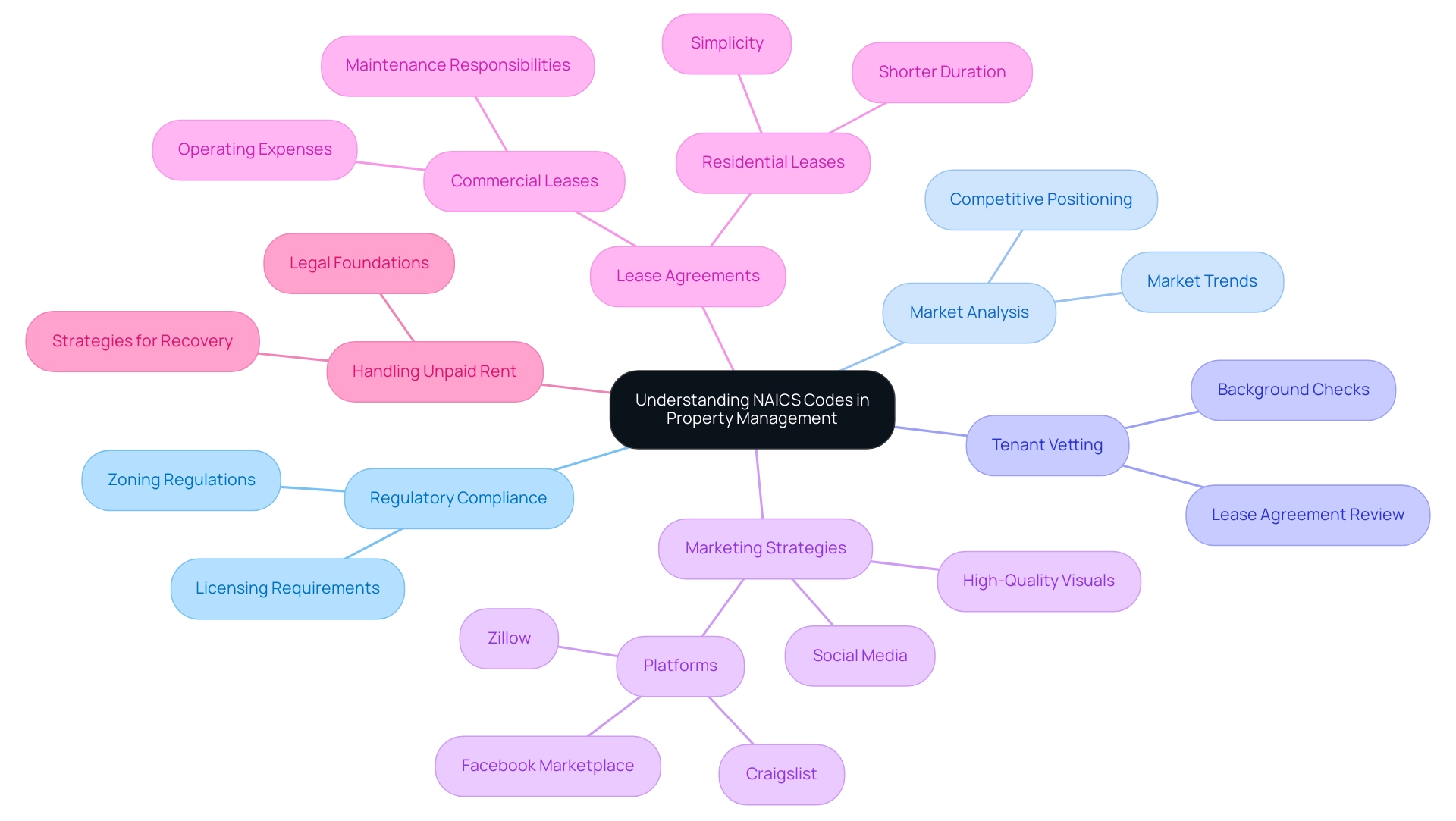
These systems are essential for landlords and managers, as they aid not only in the identification and classification of businesses but also simplify crucial processes such as regulatory compliance, market analysis, and focused marketing efforts. Comprehending industry classification systems enables property managers to conform to sector standards, improving their capacity to convey services efficiently to prospective clients.
In the realm of tenant vetting, Kyle Chernetsky emphasizes the importance of this knowledge, stating, ‘Start by reviewing your lease agreement thoroughly,’ which underscores the need for landlords to recognize the broader implications of their operational frameworks. This understanding is crucial for navigating complexities that directly influence business operations and competitive positioning, especially in the wake of COVID-19, which has reshaped leasing activities and landlord strategies.
Furthermore, by utilizing these guidelines, landlords can more effectively address unpaid rent situations, as demonstrated in case studies that outline strategies for managing such financial difficulties. As we move into 2024, the implications of NAICS codes will become increasingly significant, impacting everything from compliance with licensing to financing strategies for real estate businesses.
Effective marketing strategies for rental units can include leveraging platforms like Craigslist, Facebook Marketplace, and Zillow, along with utilizing high-quality visuals and engaging social media content to attract potential tenants. Understanding the distinctions between commercial and residential lease agreements is essential, as commercial leases tend to be longer and more complex, covering aspects such as maintenance responsibilities and operating expenses, while residential leases are generally simpler and shorter.
This comprehensive understanding is vital for landlords navigating the current market dynamics. Emphasizing the extensive real estate oversight services available in New Jersey, including Short-Term Rentals (STR), Long-Term Rentals, investment opportunities, and full-service support for residential units, can further enhance a landlord’s strategy in this competitive landscape.
The NAICS Code for Real Estate Property Management
The NAICS classification specifically assigned for real estate asset oversight is 531311. This program includes establishments mainly involved in overseeing residential and non-residential real estate on behalf of owners. Grasping and properly utilizing this regulation is essential for real estate firms, as it assists in adhering to regulations and guarantees they are classified correctly within industry reports.
By following the appropriate classification system, managers can improve their credibility and visibility in the marketplace, ultimately resulting in better business opportunities.
Moreover, collaborating with Empire Property Services not only guarantees your asset is optimized for first-page search engine visibility and esteemed booking platforms but also assures comprehensive oversight services, including:
- Tenant screening
- Rent collection
These services enhance the profitability of your short-term Airbnb rentals. Our expert team handles everything, providing a hassle-free landlord experience while allowing you to focus on what matters most.

Types of Property Management Companies and Their NAICS Codes
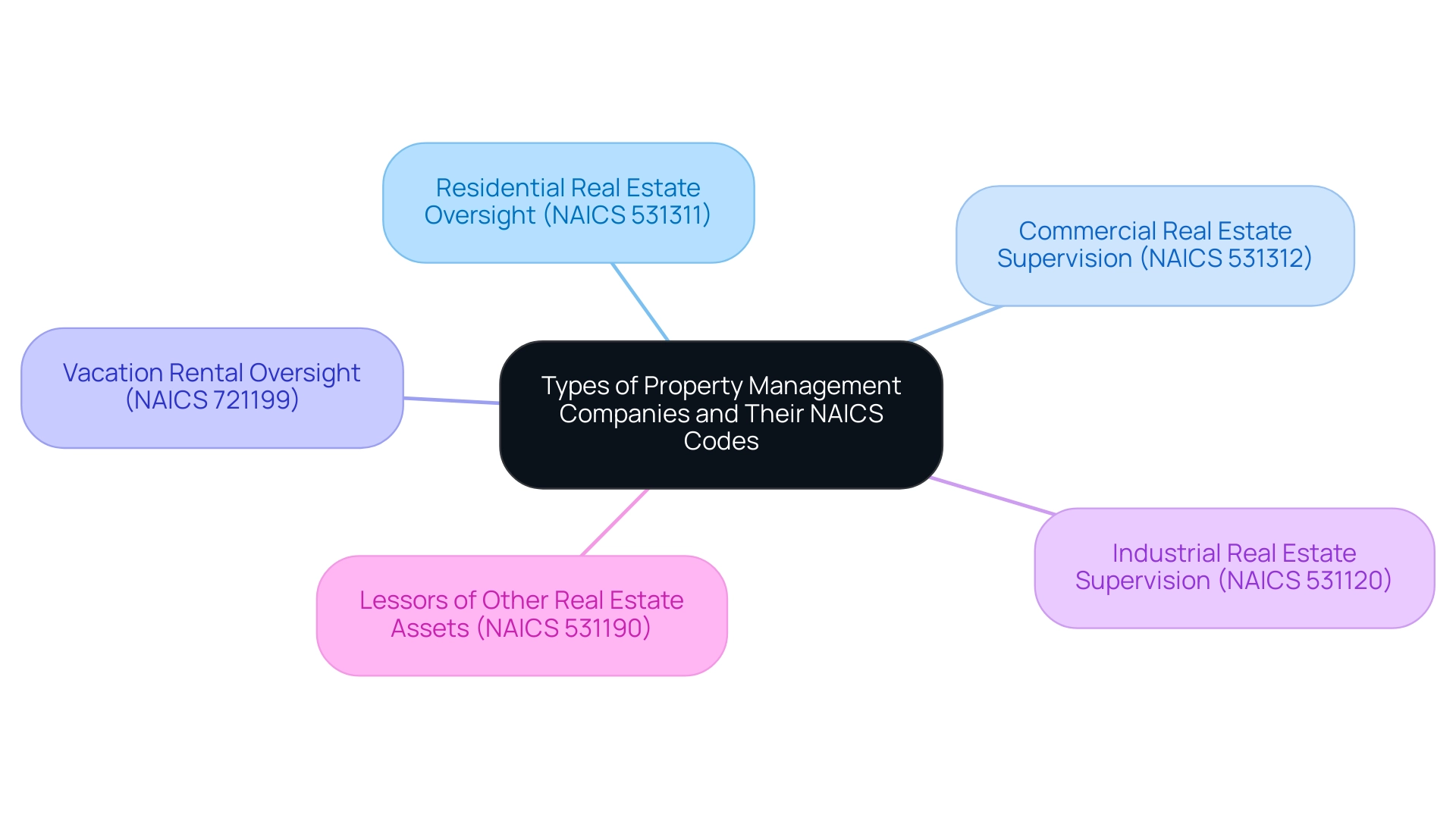
Property administration includes a range of specialized services, each recognized by its distinct classification number. For example:
- Residential real estate oversight is categorized under the 531311 classification.
- Commercial real estate supervision is listed under 531312.
- Vacation rental oversight is categorized under 721199.
- Industrial real estate supervision relates to 531120.
- The classification for lessors of other real estate assets is 531190, which encompasses various non-residential real estate activities.
Empire Property Management excels in providing comprehensive services, including tenant screening and rent collection, ensuring a hassle-free experience for landlords. Understanding these distinctions is essential for management professionals, as they not only help tailor marketing strategies but also streamline operational processes and ensure compliance with relevant regulations.
As Chris Bibey aptly articulates, ‘It doesn’t matter if you’re selling real estate, renting real estate, or partaking in some other type of related investing activity, understanding and utilizing the appropriate NAICS code for your real estate business is essential for economic tracking, loan applications, tax purposes, and more.’
Moreover, acknowledging the market share of residential real estate oversight in relation to commercial real estate oversight emphasizes the necessity for firms like Empire to distinctly define their market segment. By doing so, real estate firms can effectively position themselves to attract and serve their ideal clients, ultimately enhancing their visibility and operational efficiency.
Comparing NAICS Codes for Commercial vs. Residential Property Management
In the real estate sector, grasping the differences between commercial and residential classifications is essential for success. The NAICS designation for residential real estate oversight, 531311, includes the administration of rental apartments, single-family houses, and multi-family units, highlighting tenant interactions and lease contracts.
To enhance rental appeal, strategic marketing is essential; utilizing online platforms and professional photography can significantly attract potential renters, while offering flexible lease options can further entice them. Successful examples from the hospitality industry, such as discounted rates for early bookings, demonstrate how effective incentives can draw in more clients.
In contrast, commercial real estate oversight, under code 531312, pertains to the supervision of office buildings, retail establishments, and industrial spaces, where the focus shifts to lease negotiations, maintenance of assets, and adherence to commercial regulations. This distinction significantly affects operational methods and marketing strategies, influencing how managers attract and retain their target clientele.
For instance, statistics show that residential management typically sees a 10% higher tenant retention rate compared to commercial spaces, which can fluctuate based on economic conditions. Josh Ladick, an industry expert, highlights this necessity:
By finding the appropriate NAICS code for your real estate business, you contribute to accurate data collection and ensure compliance with various requirements.
Furthermore, implementing dynamic pricing strategies and demand forecasting can assist owners in optimizing leasing prices based on market trends. Market dynamics demonstrate that residential real estate oversight tends to be more stable during economic downturns, while commercial real estate oversight often encounters greater volatility.
For real estate firms aiming to navigate their respective markets effectively, recognizing these differences is not just advantageous; it is crucial for aligning with industry standards and maximizing potential opportunities. Real-world examples include residential managers employing tenant engagement strategies to enhance satisfaction, while commercial managers focus on optimizing lease terms to attract long-term tenants.
Additionally, understanding tenant screening laws, such as the Fair Housing Act and the Fair Credit Reporting Act, is vital for compliance and fostering a fair rental environment. By adopting these strategies, including data security and fraud prevention measures, landlords can ensure compliance with tenant screening laws and enhance profitability and tenant relations.

Leveraging NAICS Codes for Targeted Property Management Business Strategies
Utilizing industry classification codes can significantly improve real estate oversight business strategies by allowing firms to develop focused marketing campaigns and client engagement initiatives. By identifying their specific NAICS classification, real estate firms can compile lists of potential clients within their niche, ensuring that their marketing efforts are directed towards the right audience.
For landlords specializing in residential real estate, employing professional photography and stunning 3-D video tours can effectively attract homeowners and investors. In the case of commercial real estate management, focusing on businesses seeking office spaces can be equally beneficial.
Our Leasing & Tenant Management services are designed to maximize your income investment by ensuring units are rented quickly and filled with qualified tenants, minimizing downtime. This strategic approach not only maximizes marketing efficiency and fosters stronger relationships with clients by addressing their unique needs and challenges but also underscores our commitment to managing your assets with peace of mind.
Don’t hesitate—contact us today to start your journey towards efficient property management!

Conclusion
Understanding and effectively utilizing NAICS codes is paramount for success in the property management industry. These codes not only categorize businesses but also streamline operations, enhance compliance, and tailor marketing strategies. From distinguishing between residential and commercial property management to optimizing tenant relations, the right NAICS classification can significantly impact business outcomes.
As the landscape of real estate continues to evolve, especially in response to recent market shifts, property managers must remain agile and informed. The strategic application of NAICS codes enables landlords to navigate complexities, manage challenges such as unpaid rent, and align their services with industry standards. Moreover, recognizing the differences between various types of property management can inform better marketing strategies and operational efficiencies, ultimately leading to improved profitability.
In conclusion, leveraging NAICS codes is not just an administrative task; it is a critical component of a successful property management strategy. By embracing this knowledge, property managers can enhance their credibility and visibility, attract the right clientele, and build sustainable businesses that thrive in both stable and volatile market conditions. Now is the time to take action and integrate these insights into property management practices to ensure long-term success and client satisfaction.


